I still get a little thrill poking through Solana transactions. Whoa! The raw logs, the instruction data, the token balances — all of it tells a story if you know where to look. At first glance it looks dense and cryptic. But once you learn to read signatures and program logs, the fog clears and you can usually tell whether a failed transfer was a coding bug, a fee problem, or an account-state issue.
Seriously? Yes — and here’s the practical part. I use explorers every single day to debug contracts and verify token movements, and a good explorer saves hours of guesswork. One tool that keeps coming up for me is a fast indexer paired with clear decoded output. It’s not the only option, though — different explorers emphasize different trade-offs between speed, decoded output, and UX.
Hmm… If you’re looking at a single transaction, start with the signature. The signature is the unique trace of that transaction and it lets you pull up everything: block, timestamp, status, fee breakdown, and the exact instructions executed. Decoded instructions are the real gold; they translate binary blobs into human verbs like “transfer” or “approve” and they show which program and which accounts were touched. Pay attention to program logs too because they often contain explicit error messages or custom logs that the program emitted.
Wow! Token movement on Solana isn’t always obvious at a glance. You may see a native SOL debit while an SPL token transfer happened inside a program, or you might find a program that batched multiple operations that together accomplish a higher-level action. That means you need to inspect pre- and post-balances and the parsed token transfer section. Also check for inner instructions, which reveal CPI calls to other programs and are crucial for understanding composite transactions.
Here’s the thing. Failed transactions usually fall into three buckets: insufficient funds/fee issues, account constraints (like missing rent exemption or not-initialized accounts), or program-level errors thrown by the runtime. If the runtime burns compute units, that will show up in the logs and often one line will hint at the cause. Check the fee payer and make sure the payer had enough lamports at the time of submission, and double-check recent blockhash validity if you’re looking at an RPC client’s behavior. Sometimes it’s a race condition between simultaneous updates — happened to me on a marketplace where two bids hit the same account almost at once; nasty, but solvable.
My instinct said it was a fee problem once, but the logs told a different story. Tools like signature timeline, token holder snapshots, and program interaction graphs help you see patterns rather than just isolated events. You can filter by slot ranges, block times, and by specific program IDs which is handy when auditing contract behavior over many transactions. Also use the multisig and NFT tabs when relevant, because those views pre-parse a lot of tedious details for you. If you’re investigating forks or reorgs (which are rare on Solana but not impossible), look at block confirmations and the consensus slot comparisons to be safe.
Okay, so check this out—start with a signature search if you have the tx ID; if you only have a wallet address, look at the latest transactions then open suspicious ones to see instruction patterns. Use the export CSV feature when you need to analyze many transactions offline or feed them into a spreadsheet. If you’re a dev, copy the instruction data and paste it into your program’s client decoder or use on-chain IDLs which some explorers will tangle with for you. And remember, RPC quirks can make a transaction look missing if an indexer hasn’t caught up; refresh and cross-check with another explorer if somethin’ seems off. Oh, and by the way, always check pre/post balances — really very very important when auditing token flows.
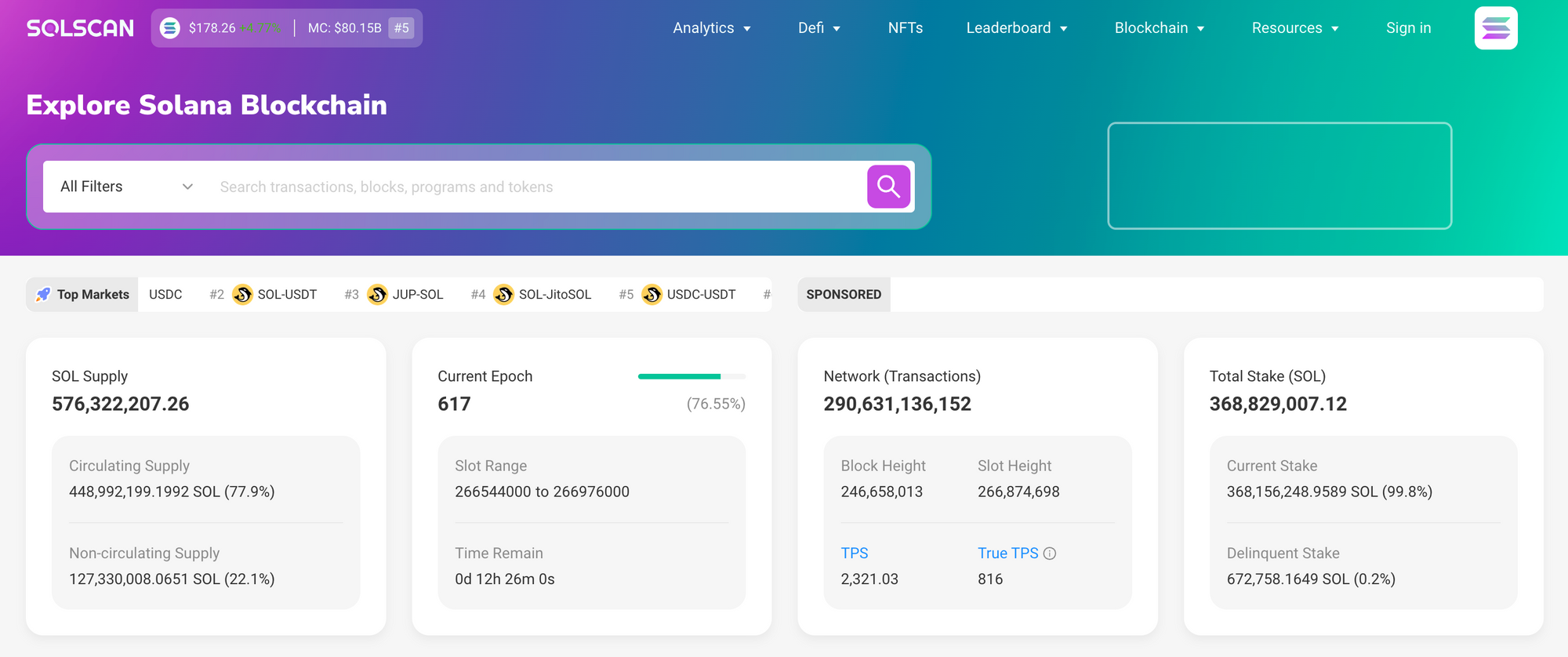
Why I often reach for solscan
I’ll be honest: I have preferences. I’m biased toward tools that show decoded instructions clearly and that let me export data easily. solscan tends to deliver those things with minimal fuss, it surfaces program logs well, and its token pages make tracing holders straightforward. For day-to-day work I value speed more than bells and whistles, though if you need deep on-chain analytics you might combine explorers and indexers. (Oh, and the UX updates over time — sometimes they add features I didn’t know I needed until I used them.)
Practical tip: when a transaction fails, open the logs and search for “custom program error” or for words like “insufficient” or “already initialized”. Those patterns show up a lot. If you see an “AccountNotFound” or “AccountNotRentExempt” message, you can stop guessing and start fixing the account setup. For permissioned program flows, look for “ComputeBudget” usage and large compute unit consumption, which often signals an inefficient instruction sequence that can be optimized.
Another quick workflow: identify a suspicious wallet, export its txs to CSV, then pivot to program IDs interacting most with it. That reveals whether activity is organic or the result of automated bots and scripts. I once traced an odd airdrop pattern back to a third-party program that was minting tiny SPLs for referrals — weird, but harmless. Still, those little anomalies add up and can skew analytics if you’re not careful.
FAQ
How do I know a transaction actually failed?
Look at the status field first; if it’s “Failed” open the program logs for error lines and search for “Error” or “custom program error”. If status is “Confirmed” but effects aren’t visible, check token account balances and inner instructions — sometimes the side-effects are subtle.
Can I use explorers to audit token distributions?
Yes. Export holder lists and transaction histories, then cross-check against mint and freeze authorities. Use snapshots to compare balances at specific slots when you need historical accuracy.
What if two explorers disagree?
Indexers update at different speeds. Cross-check against the raw RPC call or the block itself (using slot and signature). If necessary, query a production RPC node for canonical confirmation — somethin’ you should do for high-stakes audits.
Wrapping up feels too neat, so I’ll just say this: explorers are tools, not oracles. Use them to inform your judgments, not to replace them. I’m not 100% sure about every edge case (no one is), but with a few checks and the right habits you can turn a confusing transaction into a clear story. Keep poking around — the chain tells you more than you think if you listen.